Questions and answers
Why does my frameless glass door rub or catch?
Changes in the relationship between the glass, pivots, hinges and surrounding opening can affect its movement. Describe the contact point and any visible change in the gaps. Do not force the panel or adjust unfamiliar fittings. An assessment should establish whether the issue involves alignment, hardware condition or damage requiring a different approach.
Can a loose glass-door handle be repaired?
The handle, its fixings and the condition of the glass around them need to be considered together. Photograph the fitting from a safe position and include any visible model information. Avoid tightening a loose fitting experimentally, especially near damaged glass. TBC can discuss whether compatible replacement or a broader repair needs to be assessed.
Can the existing glass be kept when hardware changes?
Possibly, but the replacement fitting must suit the panel and its existing preparation. Hole positions, cut-outs, glass construction and hardware dimensions can limit the options. Share known specifications or drawings. A part that looks similar online may not be suitable, so compatibility needs confirmation before buying hardware or modifying an existing installation.
What should I do if the glass panel is chipped?
Keep people away from the affected opening and avoid further operation until its condition can be assessed. Explain where the damage is and whether the panel moves or is fixed. Photographs should be taken only from a safe position. The appropriate response depends on the actual installation; a general description cannot establish that continued use is safe.
Can frameless glass be used for an interior entrance?
Discuss the intended use, traffic, privacy needs and surrounding construction before choosing a system. The glass, supporting fittings, locks and any closer need to work as an assembly. Supply drawings or wide photographs if available. Final suitability, measurements and project requirements should be reviewed for the particular opening rather than copied from a similar-looking installation.
Will new fittings match the existing ones?
Provide manufacturer details, finish preferences and photographs of the retained hardware. Matching appearance and matching function are separate questions, particularly where glass preparation limits the replacement options. Ask which proposed parts are confirmed compatible and whether visible differences remain. Do not assume a new fitting can be installed simply because its cover has a similar shape.
What affects the cost of frameless glass work?
Panel size and specification, hardware arrangement, access conditions and the condition of supporting details influence the scope. A hardware adjustment and a replacement panel are very different tasks. Explain the symptom and desired outcome, then ask for the proposed work to identify retained parts, new components and any measurements or specifications still awaiting confirmation.
What photos are most useful for an enquiry?
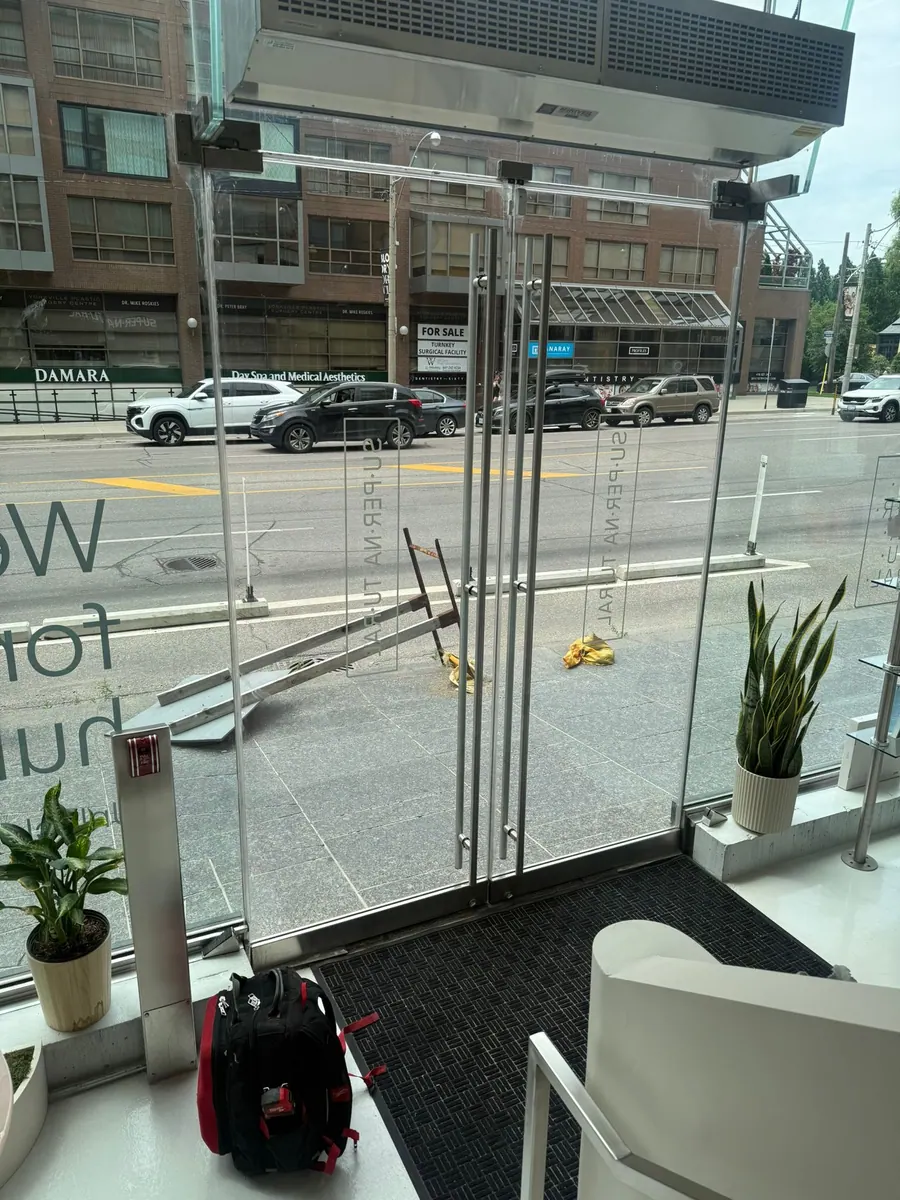
Include the full opening, top and bottom fittings, handle or lock and the surrounding frame or walls. Keep clear of loose or damaged glass. Add visible labels or drawings if available and explain how the door behaves during normal use. Close-up images are most useful when a wider view establishes where each fitting sits.
Can you give a firm price from a photograph?
Photographs help explain the opening and prepare an initial discussion, but they may not show dimensions, concealed damage or component compatibility. Ask whether a figure is an estimate or a confirmed quotation and what it assumes. Final scope should identify the work, retained parts and any site information that must be checked before ordering or attendance.