

Why a door that will not latch matters
If the latch does not engage, the lock cannot hold the door shut, even when the key is turned. On exit doors and fire-rated doors, closing and latching fully is part of how the opening is designed to work. A door that hangs open also lets in drafts, noise and dirt, and wears out the closer faster.
The most common causes
1. The door closer is out of adjustment or failing
Most commercial doors use a hydraulic closer with separate speed controls for the main swing and the final few inches, called the latch speed. If the latch speed is too slow, the door stops just short of the frame. Oil on the closer body, the floor or the door is a sign the closer is leaking and should be replaced, not adjusted.
2. The door is sagging on its hinges or pivots
Worn hinges, loose hinge screws or a tired pivot let the door drop at the latch side. You will often see the door rubbing the top of the frame or the threshold. Continuous geared hinges are a common fix on busy aluminum and steel doors.

3. The latch and strike no longer line up
If the latch hits the edge of the strike plate instead of dropping into it, the door bounces back. This happens when the frame shifts, the door sags or the strike plate loosens. Sometimes the strike can be adjusted; sometimes the underlying sag has to be fixed first.
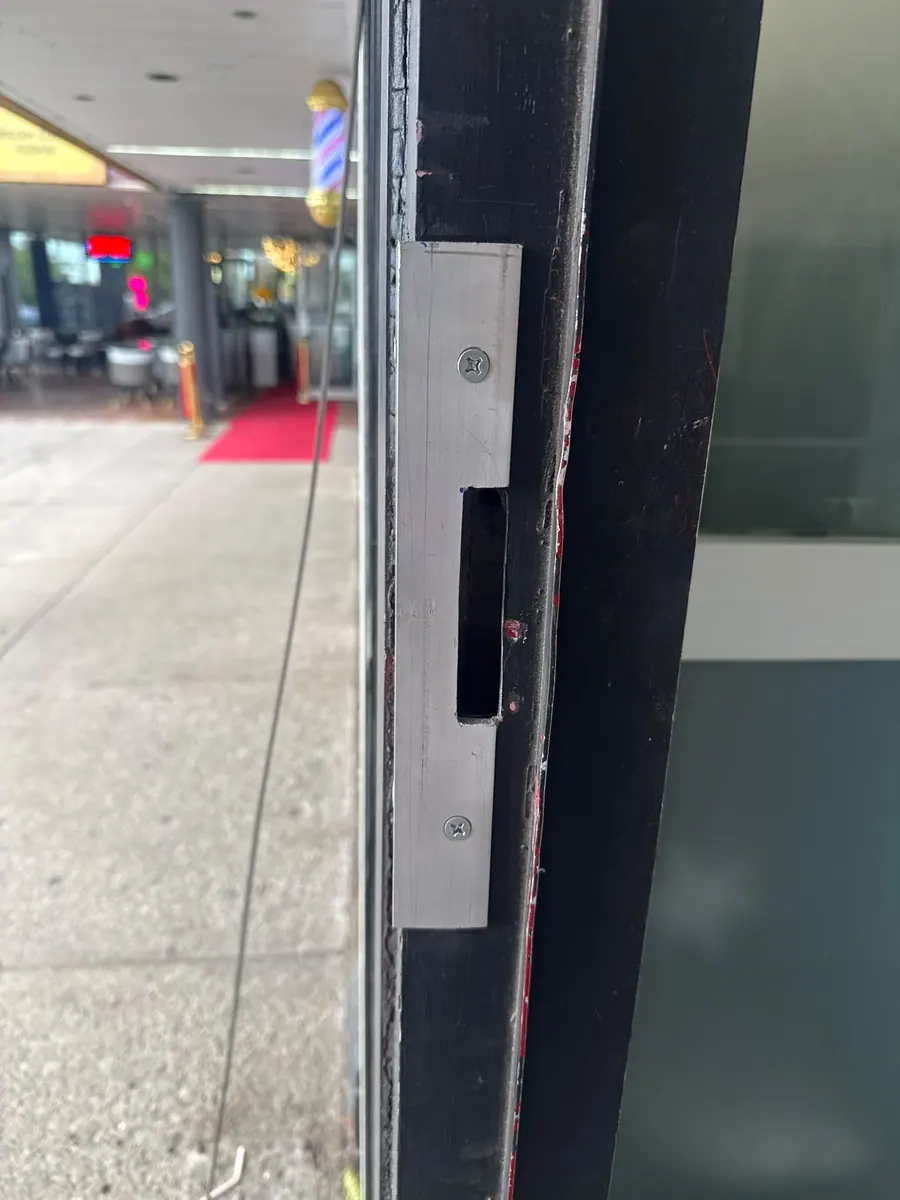
4. A worn or damaged lock or latch
Narrow-stile storefront locks and latches wear with heavy use and can stick or fail to throw. Corrosion and break-in attempts also damage the mechanism.
5. Weatherstripping, thresholds and seasonal movement
New or bunched weatherstripping can hold a door open. Aluminum frames and closer fluid both react to temperature, so a door that closed well in summer may stall in winter. Air pressure differences inside larger buildings can also push doors open.
6. Exit devices and electric hardware
A panic bar left in the dogged (held-open) position, a sticking exit device or a misadjusted electric strike or automatic operator can all stop a door from latching.
What you can safely check yourself
- Open the door fully and watch it close. Note where it slows, stops or slams.
- Look for oil on the closer, the door or the floor.
- Check the gap around the door for rubbing at the top or the latch side.
- Check that hinge and closer arm screws are tight.
- With the door open, press the latch in and let it out to see if it moves freely.
- Note whether the problem is worse in cold weather or when other doors are open.
Do not take a closer apart or remove the arm while it is under spring tension, and do not modify a fire-rated door or its hardware.
When to call a technician
- The closer leaks oil or the door slams.
- The door will not latch after a small closer adjustment.
- The door, frame or hinges are visibly damaged or bent.
- It is an exit door, a fire-rated door or an automatic door.
- The lock or exit device sticks or will not secure the door.
What to send us
A photo of the whole door from inside, close-ups of the closer, hinges, latch and strike, any brand labels, and a short description of what the door does. Include the property address and entrance location. See commercial door repair, door and 3-point lock service and automatic door operators and access control, or request a quote.


